
The Super GP Care Model: Better Dentistry, Greater Autonomy
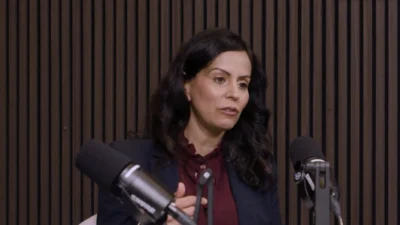
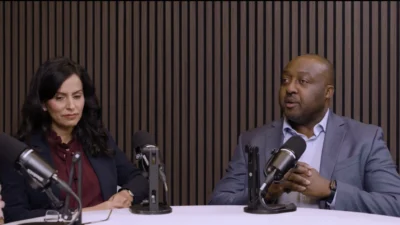
Leading dental professionals Dr. Anna Singh and Dr. Farai Kambasha join host Dr. Bill Bloink to dive into the shift toward comprehensive care. They discuss how offering more dental services under one roof improves patient convenience, strengthens doctor-patient relationships, and eliminates unnecessary specialist referrals.
In this episode:

Dr. Bill Bloink
Host Heartland Dental
Dr. Bill Bloink is a founding partner of Heartland Dental and Dr. Rick Workman's first business partner. A 1988 graduate of Southern Illinois University School of Dental Medicine, Bloink opened the first Heartland Dental supported practice in Springfield, Illinois, in 1991 — now the support network's second most productive practice. A national and international speaker on leadership and communication, he has educated tens of thousands of dental professionals.

Dr. Anna Singh
Guest Heartland Dental
Anna Singh, DMD started her journey as a Heartland Dental supported doctor and has been advancing clinical excellence ever since. As senior vice president of clinical operations, she oversees enterprise clinical education and professional development initiatives that enable supported doctors, their teams, and field leaders to provide better care for their patients. Dr. Singh was at the forefront of establishing Heartland Dental University and helps lead the clinical service line so that supported doctors can focus on elevating their professional growth.

Dr. Farai Kambasha
Guest Heartland Dental
Farai Kambasha, DDS is a Clinical Director and Heartland Dental Supported Doctor. He graduated from Howard University and has completed Invisalign® technology education, on top of being an active member of the American Dental Association. He constantly tries to better himself and his technical skills to provide the best care for his family of patients.
Key Takeaways:
- The Super GP model expands general dentistry to include complex care.
- You can eliminate extra appointments, extra time off, and multi-office navigation for patients.
- Patients will travel hours to stay with a practice that they trust.
- Offering same-day treatments gives patients care when they need it most.
Transcript
You owe it not only to yourself, but more importantly you owe it to your patients to become the best version of yourself that you could be
They're a little surprised. You mean you can take care of all my needs here, and that it's almost creates like a wow factor. Like, oh wow, I didn't believe you could do that. That is what a super GP means to us.
Welcome to Masters and Mentors, the podcast where we talk to the leaders who are shaping the future of dentistry. In this episode, we'll talk about what it means to be a super gp, why it matters to patients, and how offering more under one roof can set your practice apart. My name's Dr. Bill Blo, and I'm joined today by Heartland Dental, senior Vice President of Clinical Operations, Dr. Anna Singh, and clinical mentor and supportive doctor for iia. Welcome to you both. I'm glad that you, that you guys are, are here. You know, it's a, it's been a, a really, uh, hot topic, uh, without throughout dentistry, but particularly here at, at Heartland when we're talking about this concept of a super GP and why patients might want that. And so for, for, for those who don't know what that is, why don't we just start right at the basics? What, in your, uh, opinion, Dr. Singh, what the heck is a, is a, is a super gp? I think
It's a great question, uh, because, you know, when we talk about super GP term, it's probably you lose used a little bit loosely too. Uh, but what I would say, if you can take care of your patients that is a super GP and take care of all their needs when they come to you, uh, they are really looking out for that care that you can provide under one roof. That's what means the super gp. It could be anything. It could be, Hey, I'm in pain. Take out my tooth. Hey, I'm in pain. I need a root canal. Hey, uh, can I make my smile better? And can, can this be a place for me? So I think it's a variety of services that you can offer within your practice, and it's, it's nice when you can able to do that bread and butter dentistry that exponentially changes the trajectory of your practice. It can make your practice super profitable more than importantly, you take care of patients when they want to be taken care of.
You know, it was really interesting to me. I, I was sitting with a, a, a couple of younger doctors at the, uh, opening ceremony here at, at winter conference, and, uh, pat asked a question about what was the, the number one thing if a doctor was doing one thing in a de novo practice, we have learned that they do one thing that we pretty much, or if they do it seven times in the month, what that was. And I, I turn to look at them and they, and they both had the, the right answer, but the, the, the bottom line is helping people when they need to be helped. And if you can do that in your practice, that almost ensures that at some point you are gonna be successful in, in dentistry. So, Dr. Kacha, I'm, I'm curious as, as in your work as a, as a mentor and as as you are traveling about and doing all the, the teaching that that you do, what are some, what are some things in in your world that you encourage especially young doctors to, to think or, or even older doctors who've kind of been said in their ways about considering to, to becoming this super GP that, that we're talking about?
Yeah, it again, a great question. The one thing that I see a lot of is doctors wanting to get to a spec to, to some sort of specialties to, to do implants. So to do something really, you know, fun and, and glitzy and glamorous, so do to a lot of veneers. And what I typically tell them is, the best way to get there is to learn to do the basics well. And by doing the basics, I mean, taking care of the patients that are walk through your door every day. If you are able to take care of every patient or almost every patient that walks through your door, you will get to be able to do those fun things that everybody wants to do. Um, patients really don't want to be told, Hey, you know what? You need to go over here and, and then after that you need to go over there and then come back to me and then we'll finish everything up. They really, they chose my, my practice, your practice, whoever's practiced for a reason and they want to be taken care of by the person they chose to, to, to, to do that work. Right? And so it's really, really important when I talk to these doctors that, um, the best thing you can do for your patients is to take care of what they need. And in most cases, a lot of that is just some of the things that we consider bread and butter, straightforward, everyday dentistry. So being able to do that molar root canal because the patient came in and is off work and needs to get it done today, being able to take that tooth out for them because they're in so much pain, rather than giving them a prescription and sending them somewhere, you know, where they might not be able to get in for another week or two. And, and, and what, what kind of message does that send to that patient? So taking care of people first, and then you are able to do all the fun stuff that you wanna do. You know,
Those, those two young doctors that I was talking to, I, I said, I said to them, the, the, the one thing as a young doctor, if you can do, and that is alleviate human suffering, if you can alleviate human beings from suffering in your community with, with whatever they're suffering, you will build a reputation very quickly in your, in your community. I know that, that, Dr. Singh, you, you are as you, as you build frameworks for, for, uh, uh, education. I know that's something that you think about all the time is about how to help young doctors achieve those, right. Those things.
You know, it's interesting. So I'll ask you this question, no right or wrong answer, but what is the number one thing a new dental student is asking for is when they join Heartland or any other, like, what are they really craving for
Mentorship
Yes. And what procedures they wanna do?
Root canals?
Yeah. No, not really, but
right now, wish,
But you know what, they all wanna place implants. Mm. And I think there, there's an opportunity for our, even our educational offerings in our dental schools. How do we make dental students capable of taking care of their patients when they get out of dental school? It's not about placing implants. I'm not against implants. I think implants are the of the best thing that we can offer to our patients, but we have to be able to make sure that they're confident and competent to take care of the procedures that get their patients out of pain. And we're missing that link today. So when you say, you know, we've been doing this for a while, making sure we have the right educational information and getting, making sure that we teach people how to do endodonic, endodonic is such an important thing that gets people out of patients, out of pain, restores the tooth to function and keeps that tooth for a lifetime. And that's all we wanna do. The lifetime care philosophy is really important for us. So we're not teaching episodic care. We're teaching people so that they can truly understand, how do I keep these teeth for a lifetime care? That to me is a super gp.
You know? Can you think of a, can you think of a, uh, a patient or, or an experience Dr. Kashia of, of a patient when they were just really wanted your help with something and, and you weren't quite ready yet, but you made a commitment to, to, to learn and to master a, a, a procedure? Can you think of that? Yeah,
And you know, I, I've, I've probably said this story before, but I had a patient, um, we, we were doing extractions and we were doing wisdom teeth extractions. Um, but we were not sedating our patients at that time. I was not sedation certified, and I had no desire interest to be sed . Okay. It was not on my goals of things to do, but, um, this patient says, I, I want you to do this work. I want you to take my teeth out. I trust you to do this, but will you sedate me? And I was like, well, I can't sedate you. I'm not certified. And she was like, well, they're not bothering me that much. And I was like, well, you know, I, I, I'm thinking about getting sedation certified. And the weirdest thing, she came out of her mouth after that, I will be the first patient when you get back. Oh, wow. Now, I don't know about you, but I've never wanted to be the first patient Right. On anything. And, and
I've always said there's a special place in heaven for patients of dental students. The very, the very first one. Right. There's a special place reserved for them.
Right. And, and this patient too. Yeah. Um, but she, she wanted to be, she was like, I want to be the first, when you come back, I will be here. I will be your first patient. And so I was like, well, that kind of puts me in a bind. Now I actually have to do this. So I ended up going through with it and, and getting the sedation certification. And lo and behold, she was waiting. She was the first one there. And it took us a little longer because we wanted to make sure everything went smoothly, but everything went perfectly smoothly. And now we offer that service to our patients. And the interesting thing about that is that one case is, is one anecdotal case, but, um, ever since we started offering that, when patients, other patients realize that we offer that service now a lot more people coming in saying, Hey, I heard that you can sedate me for this. Can you just do that? And, and I'll be happy. This is something that I never wanted, so to speak. But it became a part of the practice because once we started offering it, I mean, patients were coming out of the woodwork asking for this. Um, another case is we,
And you never even knew that I did know prior to getting certified,
Did not know this was a problem. It was a problem because we were referring all patients out. Yep. Um, and we felt like we were doing a great service. Oh, I see the problem. Let me give you a referral and go over there. When in reality, what I realize now is that those patients never wanted to go there in the first place. They would've preferred to stay and have us treat them in that same practice. Because when I, when they come back for their recare, I can, Hey, how is that, you know, area feeling where we took that tooth out. They, they don't have to go see the oral surgeon for their, for their, uh, follow ups. They're gonna see me tomorrow, or they're gonna see me next week. They don't have to make, you know, a specialist appointment to do that. Um, and last week, this was last week, I had another patient and, you know, came in and said, you know what, I have, I was sent to the oral surgeon to get this taken care of, but I, they can't get me in until January. And I was like, wow. We could, I mean, and then of course they turned around and was like, but I heard that you guys do this. And I was like, well, where did you hear that? My boss told me their boss was a patient. And so here they come. We took care of them the next day because they, they were like, I'm not waiting till January to get into the specialist. No problem with specialists. I love specialists, no problem. But if, if the patient needs to get that work done today and that they can't get in somewhere else, we have a responsibility if we can do it. And if we can learn to do those procedures, we have a responsibility to learn to do those things so that our patients can get taken care of today, if possible.
Today. It's such an important, important word. And I, I wanna, I wanna circle back around, 'cause you've both said this word and it, it, it's so important. You both use the word trust. And so, you know, in communications class, and we talk about the 13 dots, the fifth.is discovering people, people's emotional treasure and their dominant buying motive. And inside of that is always this word trust and how people trust us. So, Dr. Singh, I'm really curious, how do you see trust playing a part in a patient accepting your treatment plans? And how would you advise doctors to build that?
So, I know, I'll take it back to super GP before I answer that question. To me, super GP also means great patient experiences. And great patient experiences can only come if your verbal skills are there to wow the patient experience. And if you don't have that, that means you have to be listening to your patients. So the believability, the likability and the trust only comes if you're listening to your patients really well. Because
All patients expect the dentistry to be of a high, they, they just expect it. If you have a white coat on, they expect you to be the expert. It's going to be excellent. But I love that you're talking about
Experiences. If, if they truly, if you're truly listening to them, and if they have had a good experience, you will come up with the solutions that actually they're gonna say yes to. Because everybody is solving, solving for something. You know, you talked about what is their dominant buying motive, what makes them want to trust you, or what makes makes them wanna say yes to you? There's always something, everybody has a story. Some, it could be a grandma could have her own story. Busy professional could have their own story. But if you listen to their story, carefully, intently, ask question, be curious, not just keep telling them what you think it is. Uh, we use a philosophy called, uh, either it's a QBQ, be very curious, or pc SB problem, consequence solution benefit. If you understand that paragraph really well, there is no way in the world that the patient wouldn't say, I don't wanna be in this practice. Because you listen to them, you understood them, you explained the consequences of non-treatment. That's what causes the trust, because now they own it. It's, I call it the process of self discovery. If you tell me what I need to do, or whereas you will help me discover my problem, I'm more likely to say yes, because I figured it out. I own the problem now. So I, I, those skills are really important skills to becoming a super gp. Just having the technical skills does not make you a super GP either. So if you have those verbal skills to get the patients to say yes, that's the only way we're gonna become a super gp, because who are you gonna utilize those skills on? Yeah. Right. So otherwise you can't use the dentistry on yourself. You
Know, the, the, the experience that a patient has in our practice when they come, when they come to see us, and although they may not be able to pinpoint why they feel right differently about their experience, but they do indeed feel differently. And that's the feelings from from, from listening. And so we're talking about all these different procedures, and Dr. Kosh, it sounds to me like you and your practice, you can provide just about anything that a patient might need. Do you think there's, there's risk in involved in, in maybe doing too many procedures or, or, or being, uh, uh, yeah, just, just too many procedures. Is there risk in that? Or, or, or how am I thinking about that? Why am I thinking
About that? You mean like, what do they call it? Jack of all trades? a
Jack of all trades.
Um, so, so the interesting thing is, when it comes to risk it from a, you have to learn how to do these things, to be educated, how to do it, have a mentor to help you through that process. Um, it's, it's obviously we want to be to everyone who does more advanced procedures or, or more complicated procedures to know and to be safe, and to make sure that from a patient perspective, the outcomes are great. Um, and that's the most important thing. So getting trained to do it properly, having mentors to help you with that process, having systems in place to, to make sure that everything runs smoothly is really, really key to, to implementing these things properly. Um, but in terms of my practice, for example, I have partner doctors now that I could not practice without because I can't do everything right it by myself. So we have, uh, you know, other doctors that, that are also learning to do more and more every day. Um, and as they grow and as they learn to do more, hey, I can pass off some of these other things to them if they, uh, if they feel comfortable doing those, those things as well. Um, there's an abundance mentality. There's so much work to be done. Uh, our communities, I don't practice in a very big community, right? Um, but we have patients that come to us who are referred to us from other doctors, not even Heartland doctors, other doctors that are, that are referring saying, Hey, my patient needs this. They can't get in over there. Could you take care of 'em? Um, and so there is so many patients that need this work. As long as we learn to do the procedures in a safe environment, uh, learn to do it properly, then there's no reason why we shouldn't be able to do it. And like I said at the beginning, you know, a jack of all trades is a master of none, Uhhuh . But the full quote there actually says, A jack of all trades is a master of none, but still better than a master of one. Wow. That's the actual quote. Nobody ever
Finishes. I don't know if I knew that. Nobody
Ever finishes the rest of it. Always learn
Something new.
Right? See, I learned something today. You're right. You're absolutely right. Yeah. So, so you, you touched on a, touched on on word two about mentorship, and I know mentorship is near and dear to both of your hearts, and you've worked very hard in developing a, a mentor network within our organization. Can can you talk about mentorship and, and how doctors can learn new skills in adopting, uh, by adopting mentors? And, and you guys can, can discuss that I'm interested in.
Sure. I'll I'll say two couple of things here. For me, education is mentoring and mentoring is education. So the training and education, the true value comes in the implementations. I, you can have the knowledge, but do you really have the skills in order to develop the skills you need somebody who can guide you around. And that's what a mentorship is all about. Uh, a mentorship can be for anything. It could be for, Hey, I wanna learn how to talk better to patients. Or it could be about, Hey, I don't know how to really finish endo in about, in 45 minutes, I take hours to do How to do endodonic For that to happen, you have to be open, positive, and mentally flexible. If you don't, are not open, positive and mentally flexible, you will not be able to take on a mentor. What did you say? When the, when the student is ready, the teacher appears and the teacher will not appear if you're not ready. So I always talk about mentorship can only happen when you're personally, you're gonna be ready. And even when you have a mentor, which we are so lucky and blessed, we are surrounded by great clinicians all around that provide great mentorship. Whether you talk about endo, you talk about implant, you talk about aesthetics, we do have a mentor for that. But the journey has to start with the, with the person itself. And I, we call it the canine loop. You've heard of us talk about constant and never ending improvement, but it has a process, plan, do study, act. You gotta plan your thing. Whether you're trying to improve a skillset, Hey, I'm gonna try to focus on Endodonic. What's my plan? I'm gonna go observe a person. I'm gonna actually take on a CE course, I'm gonna do a hands-on skillset. I'm gonna do a tabletop. What is your plan? And then you put that plan in place and study it, how well you were successful. Get feedback from other, I think the best way you can learn is getting feedback from others. That's the best gift. Somebody can give it to you. And who better to give you feedback? If you have a mentor, they can tell, you can guide you what you did well, what are some of the areas where you can improve yourself? And then when you plan, do, study, act on it again, and then keep going on the cycle over and over again. So having that ability of network that we have within Heartland with tremendous amount of resources, mentorship can actually transform your life if you find the right person.
That's really great. So how would you advise, uh, someone finding a mentor that that was a good fit for, for them? How, how's the process within Heartland set up? And, and not, but not just in in dentistry, but it, it mentors in, in general, how do you, how do you seek out mentors in your life?
So that's, that's a really good question. So I'll start with, you know, within Heartland, um, in our community, we have so many doctors that are really great at what they do. And the greatest thing about this community is they're willing and wanting to pass on that information, pass on that knowledge to somebody else to help others. And so we have, you know, events where we will get together as doctors just to discuss cases or to learn about a certain procedure. And we'll have mentors who like line up to say, I want to help. I, I really want to help these, these younger doctors. Or even in my case, like I still have mentors, right? You know, I still have people I, uh, I reach out to and talk to about, about cases. Um, a lot of the mentors are, are friends of mine at this point. But if we're out in the general, you know, in the general community, it becomes a little bit harder to find mentors. Um, but it's still very possible going to those, you know, meetings and, and, um, dental society meetings is a great way to, to at least get to know the people around you, get to know the people in your community so that you can learn to maybe trust each other. That's the first thing. You know, the trust between a mentor and a mentee is really important because someone coming, asking for help with something is a very vulnerable thing. And so if someone's gonna mentor me, I want them to understand, hey, you know what, this person's asking for help or wanting to learn more about something. And so we want, you know, we want people to understand that that is a trust-based relationship. Um, and so meeting new dentists, networking with other dentists, um, come talk to us if you want to. And, and we'll, we will, you know, in our, in our community, all the doctors are assigned mentors when they first join, no matter what their education level is, no matter what their experience level is, they will all have a mentor assigned to them. How much or how, you know, little they use that mentorship relationship is entirely up to them. You know, it's, it's an open door, but they have that capability. Um, we ask that they reach out and talk to their mentor at least in the first, you know, couple of months, you know, every once in a while. Um, but at the end of the day, it's really, really important for the mentor doctors, the mentor doctors especially, to reach out as much as possible to their, to their mentees so that they can feel comfortable when the moment comes and somebody needs some help, they know that they can pick up the phone and, and call someone.
Such a great system that, that we've set up. And so, you know, we've talked, uh, uh, a little bit about, um, building our skills, uh, using and utilizing a, a mentor, but ultimately this is all geared towards patient care and, and, and taking care of our, our patients. So from your, your perspective, what is the benefit, what's the greatest benefit for our patients in a doctor considering becoming a, a GP and increasing his or her skill level?
So the biggest benefit that I see, and I can speak from, from within my own experience in my practice, um, patients choose our practice for a reason. Mm-hmm . They choose the doctors that they want to go see. If you come to my practice, you could throw a stone in any direction, you'll probably hit another dental office, right? Um, but we have patients who will drive past those dental office to come see us. I, I have one patient who drives, uh, three and a half hours to come to my practice. Um, I have another one who drives two and a half hours to come to my practice. I say that, not to say, not to brag or anything, but to say that we've built a relationship with these patients and they're like, you know what? I trust these people and they're gonna take care of me, and we take care of them. The big biggest benefit to the patients is they don't have to take another day off to go to see some other specialist. They don't have to find daycare again. If they take a day off work and they say, Hey, I've taken a day off work. I'd like to get this taken care of today. They know, they know in our practice, we will do everything in our power to take care of them today. That's the biggest benefit. It's a time savings for our patients. It's about the fact that they know and they trust that we will to do what's in their best interest. And we'll do it in a way that is, is convenient for them as much as possible. Um, the fact that they don't have to learn another office, another provider, another, you know, all of those things. They don't want to do
Insurance, all that stuff.
Yeah. They don't, they want, they want none of that. They've done it once with us and they're like, okay, you guys know all my information. Great, now let's just talk about what needs to be done. And now we're talking about just the care that they need rather than, you know, sending them to different places. And the number of times my patients look at me and say, oh, you can do all of that here. And we say, yeah. You know,
Sometimes they're surprised. Yeah. We'll, you'll notice that patients are not used to that. We call it our super GP model. 'cause most practices outside will tend to refer a patient outside. Like, let me send it to the surgeon. Let, let me send it to the endodontist. They're a little surprised. You mean you can take care of all my needs here? And that it's almost creates like a wow factor. Like, oh wow, I didn't believe you could do that. And I, that is what a super GP means to us, when you can really take care of all their needs and make the patient happy and satisfied. So then they repeat a refer more patients to us.
And, you know, when you develop a reputation within your community of being the place that if you have a problem, go there. Yeah. Yeah. And when you develop that reputation within your community, you will be the place where everybody goes because they just want to be taken care of today. And so, you know, dentistry is really evolving. And one of the themes for this weekend is elevating ourselves higher. And we're, we've talked a lot today in some previous episodes about how fast dentistry and technology is evolving. So, Dr. Sing, I, I'd be really, uh, interested to hear your take in how you see the role of, of the super GP and how you see that fitting into, um, the technological advances that we're experiencing, literally. 'cause what we thought was great yesterday is old
News. It's not, yeah.
It's old news yesterday. So how do you see the role of a super GP playing within the, the technological environment we're in?
So there are a couple of things, right? I would say technology is gonna help make dentistry so much better and possibly easier, but it will only be possible if you're open to learning new skills. Adoption of technology will be key in implementing the, some of those changes that come across with technology into our practices. And when we look at, look at technology, well, whether you're looking for diagnosis or you're looking for scanning, I mean, practicing within the last 10 years, you would've seen how much technology has influenced the way we work, take care of our patients. It's only making it easier. It's actually making it a more precise, the precision of looking at your crowns when you can see your image, your prepped crown on a large screen, you're almost making you a better dentist. So it's making you a better super GP dentist because now you can see a lot more things that you probably even missed before. Uh, when it comes down to video or any kind of AI that you're utilizing in your office, diagnostic capabilities are gonna become better. I mean, you're seeing more things, your case acceptance is gonna change your case. Acceptance is definitely gonna involve when your patient's exactly. Seeing what you're seeing, you're able to translate what we say a picture's worth a thousand words. We've been said that, you know, well, you always talk about it pictures up front X-rays in the back. When patients are able to see their pictures up on their screen, oh, this is my teeth. Look at what technology has done for us. It's increased the case acceptance for our patients. So more case acceptance means we get to be a super GP more, many more times. So I, I really think technology is going to shift the way dentistry is going to be done and have a massive influence, make it better. Whether it comes to even like think about, um, clinical notes, our clinical notes are gonna look much different a year from now or two years from now. Even how we utilize for patient communication, if ambient listening can be very strong, can even guide us what we should be talking to our patients. Maybe we missed something or our patient was trying to tell like what kind of personality profile they are. Ambient listening has been listening to their ability, okay, this patient actually has a deep personality or they actually love to be treated with love and care and make sure you're doing that. So technology is gonna really gonna improve the way we practice dentistry.
Well, uh, and I love that you just, you just touched on that because the thing that excites me about the technology is that I, and, and I know we all subscribe to this, that we are in the people business. It just so happens that we take care of teeth. And so the way I see technology evolving, it's gonna actually help us to become more relatable or, or
Leaving the time for relationship building Yeah.
Relationship building to take away those burdens of diagnostics so that we can be more relational mm-hmm . And so I, I just think that's wonderful. Let's shift a little bit and let's talk about, um, the growth of your practice. And let's talk about how this, um, decision, because it is a decision and it's a choice that you made to become a super gp, how that has helped and impacted the growth of your practice within the last three or four years since you made this choice?
Yeah. It's been, it's been a journey. Um, everything that we've added, even, you know, this 'cause it's a gradual process of adding these, these procedures and these, uh, capabilities in our practice. And every time we've added something and we've implemented it and my team has embraced it and brought it actually to the, to the practice, to our patients, um, we've seen a corresponding growth in not only our number of patients, um, number of patients saying yes to treatment mm-hmm . Um, but also, uh, the referrals that come in. Because now that once somebody sees that, oh, I got taken care of here, they're gonna tell their friends, oh, you can go over there, they'll take care of you over there. And so we've seen that gradual, continued growth in, in what we've, you know, what we've been able to, to see in terms of patients coming in. Um, and like I said, the growth itself and the procedures have been, has been gradual. 'cause we didn't throw everything in there into the pot at the same time. Right. Um, but as we've added and layered on top of these procedures, more and more things that we're able to do and take care of for our patients, we've seen a really, really interesting constant growth in our patient base. Um, and so patients will come in and say, I heard that you guys can take care of this. I heard you do this. Well, they'll come in and they'll ask for a specific doctor by name, um, because that's the doctor that their friend sees, you know, and so, which is, which is phenomenal. We, we, you know, there, there's multiple doctors, like I said in my practice. And, and we love to hear that because that's no, there's no greater compliment, uh, than for someone to come in and say, I don't know you, but I heard that you can take care of me. And that, that is what is fueled our growth as in my, in my practice. We, at some, at one point, we actually stopped a, a bunch of our marketing because we realized that our word of mouth was actually giving us a better, um, return or a better, uh, uh, patient, um, uh, blow back experience Yeah. From for them to come in than what our, our marketing was doing. And so we cut back on on that Marketing. It's good
Problem to have, right?
Yeah.
Well, I'm gonna share my experience. Like you talk about what, you know, the super gp, how the experience. So if you've been practicing for a long time, I was practiced for 10 years, you can't reach a plateau. Like that's all like, okay, I'm doing the same thing. It's all there is. Yeah. There's all, you know, there's only so many crowns, so many root canals you could do. What was the next lid for my practice was to improve, start including clear aligner therapy, clear aligner therapy, doing Invisalign in my practice, totally put my practice to that next level. And the la other point was sedation. So those two things put catapulted really the growth of my practice. You have to reinvent it too. You cannot keep doing the same thing. Expect your practice to be growing. You have to add new procedures or you add people who are skilled to do those procedures. You, I, I think in order to truly grow a practice, there are a couple of things you could do. Either you can upskill yourself, really put yourself to the exit, put your operations in. That's a really, really important point because if patient don't have great experiences, your practice is not gonna grow. Yeah. And or get people in your practice to do different procedures. So it's, you have to be constantly learning. And that's what's so important about what we do, we both of us do with HDU constant learning. If you're not learning, you're not really not going to grow. So
It's such a holistic way Yes. Of looking at practicing dentistry, isn't it? Yes. You know, you, you, you mentioned Heartland Dental University and I as the leader of, of Heartland Dental University, I know that you have a passion for education, but when we're educating, uh, fo it's not just the, the doctors mm-hmm . That we're educating. So h how do you, uh, advise doctors when they're considering adding procedures? Not only does the doctor have to be trained, but how do you advise doctors in training their team members? 'cause I know that's such an important and integral part right. Of, of Heartland Dental's mission is, is that everyone improves together. And so how do you advise doctors to help their team members get ready, right. For this shift in their thinking? You
Know, I learned this early on when I started with Heartland was the purpose of education is results producing action. So if you're educating people, it is not to check a box. It is to really make sure they're able to apply those learnings and improve patient care. Now, if you can improve patient care, that's what brings productivity. That's what brings less stress, that's what brings happiness in a practice, you're taking care of your patients. But it can, the way that we approach it, it is not just about training the doctor. 'cause I can train the doctor all day long, but when they go back to the practice, if they don't apply it, not nothing is gonna change in the practice. So we make sure that team members are educated, whether it's your dental assistant, it's your hygienist, it's your front office staff, staff, everybody needs to know that. And all our education is based on Heartland systems. It's based on that 13 dots that we talk about repeatedly. That if that is the foundational principle, all of the education, all of the fun stuff that we call the cool stuff sits on top of it. If we didn't have that, it would be really hard to do it. And who does all that fun stuff? It's your team. If you, your front office person who's answering your phone call, did not know how to answer the phone call, you learned a new skill. Dr. Kashia started doing sedation. Well, of the, if your front office team did not know how to answer to that question of a patient calling in, is the patient gonna schedule no. So that team, that team participation for learning a new skill becomes extremely crucial. And that's what HDU will do that. So it's not just focusing on the doctor. We truly focus on the development of the practice through team training, through hygienist training, front office training. Everybody needs to grow.
That's a wonderful answer. So let's, let's, uh, let's close this, this, uh, this session up by, I'm gonna ask you guys a question. I'm gonna, I wanna know what's your answer to this. If you were to give a doctor one piece of advice about either becoming or the benefit of becoming a super GP within their community, what would that piece of advice be?
Um, I think the one thing I would say is if you want to be a reach, the, the pinnacle of what you're able to do, you owe it not only to yourself, but more importantly you owe it to your patients to become the best version of yourself that you could be. And the best way to do that is to educate yourself as much as possible and being able to provide those services to your patients as much as possible. Everything else will come, we'll, we'll be fine after that. But you owe it not only to yourself, but more importantly to your patients to be able to do as much for them as you are able to do. Um, and you will see that your patients will appreciate that more than you ever could imagine. That is, that to me is what really should. It was what really sets apart good doctors from great doctors learning to be the best version of yourself possible.
That's a great answer, Dr. Singh. We're gonna leave the, the last comment to you. Oh
My God. Feel the pressure . Um, you know, Walter Haley, long time ago said, you wanna create an environment where pe happy patients repeat and refer to me super gp. Is that, is that epitome of where you're happy patients that repeat and refer back to you. If you can develop your skills, if you can challenge yourself, and we are our worst enemy, sometimes we limit ourselves to believe that we can do it. There's nothing that anybody can do if you put your mind to it. So I said, focus on it, pay attention to it, follow the plan, do study, act potential is unlimited and you'll be so much happier going back home every day knowing that you took care of your patient, what they came in for.
Well, I wanna thank you both for, for being with us today. I want you to know, uh, that I personally have a tremendous amount of respect for both of you. I have a tremendous amount of, of affection for, for both of you. I think very highly of you both, and I'm just really grateful for, for your time today. Thanks for listening to this episode of Masters and Mentors and special thanks to you, Dr. Singh and Dr. Kashia, and for sharing their insights. If you've enjoyed this podcast, this conversation, be sure to follow us at heartland.com/masters so you never miss what's coming next.


Episode Highlights
Grow With Heartland Dental Supported Practices
Wherever you are on your dentistry journey, Heartland Dental and supported practices provide the support, tools, and opportunities to grow your career or your practice with confidence.

Sell your Practice
Explore how Heartland Dental supported practices help relieve the non-clinical burdens so you can grow your practice, advance your tools and technology, and improve patient outcomes.
Sell Your Practice
Careers in a Supported Practice
If you want to explore open positions at Heartland Dental supported practices across the country, this is the place.
Explore Opportunities