
Business of Dentistry: Growth, Data & Operations
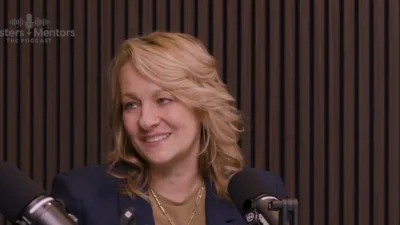
Dental industry business experts DeAnn McClain and Dr. Mavi Cruz join host Dr. Bill Bloink to break down business fundamentals that measure practice health, drive revenue, and control expenses. You'll also learn how data optimization, proven systems, and operational support can help doctors keep their practices growing.
In this Episode

Dr. Bill Bloink
Host Heartland Dental
Dr. Bill Bloink is a founding partner of Heartland Dental and Dr. Rick Workman's first business partner. A 1988 graduate of Southern Illinois University School of Dental Medicine, Bloink opened the first Heartland Dental supported practice in Springfield, Illinois, in 1991 — now the support network's second most productive practice. A national and international speaker on leadership and communication, he has educated tens of thousands of dental professionals.

Dr. Mavi Cruz
Guest Heartland Dental
Dr. Mavi Cruz is a Heartland Dental supported doctor who practices in Ft. Myers, Florida. Her passion for dentistry was reinforced in her undergraduate years at Florida International University where she volunteered her time to providing dental services to the underserved. She then received her Doctorate of Dental Medicine degree from Lake Erie College of Osteopathic Medicine in Sarasota, Florida. When not practicing, she mentors and volunteers her time and skills.

DeAnn McClain
Guest Heartland Dental
DeAnn McClain joined Heartland Dental as an accountant when the company started in 1996. After serving in various roles across the company, she is now the Executive Vice President and Chief Operating Officer. In this role, she leads the strongest talent in the industry as they provide world-class support to Heartland’s supported doctors, integrates new offices into the Heartland Dental family of supported practices, and create synergies between the clinical and operations side of the business.
Key Takeaways:
- Learn which financial metrics can give you a clearer picture of practice health.
- See how regular business reviews can turn data into actionable improvements.
- Explore how consistent systems and operational support can strengthen performance.
Transcript
If you're not growing, you're dying. We, we hear that in a lot of different instances. And in our, in our dental practice, if we're not continuing to grow our practices through things like, um, offering additional services, maybe we expand our hours, maybe we are, are ready to hire another hygienist to, to help do that, or even another doctor. All those things help build the practice and continue to build the practice which increases your same office growth.
Welcome to Masters and Mentors. The podcast where we talk with leaders shaping the future of dentistry. Running a thriving practice takes more than clinical skill. It requires strong business fundamentals. Today we're exploring the financial and operational drivers that fuel growth, strengthen performance, and help doctors lead smarter more profitable practices. I'm Dr. Bill Boy, and I'm joined today with Heartland Dental's, chief Operating Officer Deanne McClain and Dr. Mai Cruz. Welcome to you both. We're, we're thrilled to, to have you today. You know, I really wanna dive into this because these are, these are, uh, topics that many doctors, as we go through, schools, as, as, as both of you know, we don't get exposed to these things. Nope. And so I think it's really important, uh, that we have some fundamental, uh, understanding of how our business runs. And so, Dean, I wanna start with, I wanna start with you. And when you're looking at a practice and how strong a practice is, can you share with everyone what are some of the metrics or what are some of the drivers of a, of a really strong practice? What are you and your team looking at?
Sure. Well, I, I think it starts with the, the basics of most basics. So, top line, your revenue, what are you producing, and then what are you collecting? And then at the end of the day, after you paid all your expenses, what's that bottom line number? Because we can, we can show production, we can have revenue, all the patient care that you've provided, but if we don't collect it, and if we don't manage our expenses, well, we don't have a healthy practice, which really keeps the lights on and, and pays our team members and, and all those kind of things. So first and foremost, and the most basic sense, that's, that's where it all starts. Then there's a whole host of other, other metrics that you can start digging into as far as if, if things are, are, are breaking down, and I'm sure we'll, we'll talk more about that. But, you know, there's lots of, lots of elements to, to really understand where or how a, a practice is successful or not. New patient flow is another great, great one to look at to make sure that lifeblood of the practice continues to, to be driven. And then, um, how quickly we're getting our patients in access to care is always important. And then what happens when they get there. And, and all the metrics around that,
You know, uh, pat today in our, in our opening uh, opening comments to today gave you such a, a wonderful compliment about he believes that you're the, you're the best, uh, chief Operating Officer in the entire country. And I, I do subscribe to that, to that thought. And, and you and your team are doing such such great work. You know, we get kind of hung up sometimes on how much money we can save. And I'm not saying that's not important, but what would you say, and I think you touched on a little bit, what would you say would be the first thing for doctors to, to, to try to accomplish? When you said the top line Yes. Is that the easiest thing for doctors to, to control, um, in your, in your opinion?
Yes. First and foremost. I mean, it, it's, it's definitely what that top line revenue number is because that's what sits the,
The,
The, um, benchmark of how much you have to spend, right. To be able to, to do what you're doing. So a lot of times, a lot of those metrics that, you know, you're, you can't, you can't necessarily control your occupancy cost. I mean, rent is rent, um, some, you know, electric bills and all the utilities and those kind of things. I mean, you, you can make sure your lights get turned off, keep your thermostat at certain temperatures, but for the most part, those things are pretty constant. And you can't change them. But you can impact that top line, which puts all the right, the right, uh, the other metrics on the expenses in line. That's the first thing to go go after for sure. One of
The, one of the most incredible things, and I never, I I I never could understand it way back when the Dr. Workman taught me, is that if you get that top number right on your profit and loss state, your p and l, and we talk about those all the time. Yes. It's somehow magically all those numbers just magically become, right? Yes. And they all fall into, into place. But the most important thing is the, the top, the top number, the, the, the revenue. You get that right? Everything else takes care of itself. Dr. Cruz, share, share some, some things that, uh, uh, your operations team, your r your PMO, your RMO, and your RDO, how do they help you decipher? Because one of the, the great things about Heartland is we get, as doctors, we get so much data. Yes. We, we, we ha How, how does your operations team help you decipher all that data and just kind of boil it down. 'cause the reality of it is, many of us just don't have time to analyze all that. So how do they help you analyze the data that that Heartland provides us?
So we have, uh, business reviews. And in those business reviews, we go through all the metrics of, as an office, as myself, as a, as a doctor, as my partner dentist. And we compare where are the areas of improvement. So whether that is case acceptance or whatever it may be. So we can focus. If we don't do these business reviews, then we can't really deep dive or know how we can improve our office. Um, and even on those areas that we are doing well, we're always looking for improvement. But definitely those meetings of them coming together and also thrive. You mentioned Thrive earlier, where, uh, the RMO comes over and we go over all the metrics as well. So all those meetings help us unite and collaborate so that we can be successful.
So those, those are two different things. Then a business review and a Thrive are two separate processes. How often do you do business reviews? And then how often are you guys doing your thrives?
So thrives, we're doing it quarterly,
Once a quarter. You do a Thrive
Once a quarter. Mm-hmm . And business reviews like monthly,
Every month. Mm-hmm . So your, your, your operations team is coming to you every month, every month with the information that you need. So you can start making better decisions about how to guide your practice. Well, that every
Month is different. In a dental practice, you may have a month where you're doing so well and another month where all of a sudden you're not seeing new patient flow come in. And so there's a constant change of how we can pivot and, um, make things, improve things, uh, to be successful.
So, DeAnn, here's, uh, another question that I, that I have for you. 'cause we have all of these acronyms and you know, that, that for we doctors sometimes we don't understand. Can you under, can you explain to everybody a couple of things that we talk about all the time? Yes. What EBITDA is mm-hmm . And what SOG is and why those things are important to us. Sure.
Well, let's go with SOG first, because again, we were talking about top line. So SOG stands for same office growth, and it is a measurement to say, what did your practice do last year? And then how much are you increasing it this year? And why is that important? It's important because if you're not growing, you're dying. We, we hear that in a lot of different instances. And in our, and our dental practices are the same way. If we're not continuing to grow our practices through things like, um, offering additional services, maybe we expand our hours, maybe we are are ready to hire another hygienist to help do that, or even another doctor. All those things help build the practice and continue to build the practice, which increases your same office growth. So the same office, same practice. How much did you grow year over year? So that's what SAAG stands for. Uh, EBITDA is a very accounting driven term. So EBITDA stands for earnings before interest, taxes, depreciation, and amortization. All important things. But at the end of the day, um, and, and especially in in our practices, or one, you know, other than once you take your books to the accountant to, to figure out, you're really looking for what is the profit and loss from your main expenses. So we, at Heartland, we talk about income from operations, and that's what we, when we're studying the, the, the business of dentistry or your book of business in particular, like if I was partnering with Dr. Cruz, we would talk about income from operations, which is really that top line revenue. And then you're paying all your expenses and then that income or profit that you're, that you're making. And then, like I said, you take your books to the accountant, they're gonna figure your interest and your depreciation and, and all those fun words. But that, that's kind of breaking it down in very simplistic terms. So
Tho those, those are just really great ways though, to measure the health of a, of a business. That's just, that's just what it's doing. Yes. And so, Dr. Cruz, I'm, I, I'm curious from your perspective, especially as a, as a younger doctor, what kind of advice would you give a young doctor who may feel, uh, a little overwhelmed by this business that, that we're in? 'cause dentistry is a business at the end of the day. What kind advice would you give a, a young doctor who might feel a little, uh, overwhelmed or burdened with the business of dentistry?
Um, my advice would probably be that it's okay to be overwhelmed. I mean, we, like, as you mentioned prior, we weren't taught this in dental school. So the business aspect is not something that we are as we start that we know. Um, so I would suggest to seek for help, be vulnerable. Um, don't be afraid to ask around what you, what, what you're needing, what information you would like to know more. Um, I would suggest maybe getting an accountant, uh, as you mentioned, um, when I came on board, I had my operations team that I can, so like, they supported me, so I trust them, they guided me and it really, really benefited me because I didn't know anything about the business. And it just streamlined and made me focus more on my clinical skills, which is what I wanted to expand at the moment.
So you, you, you mentioned about, uh, some support folks, your operations support team, that, that helps you, uh, with information that you might need. Will you share with everyone what, what that means to you? Who are those folks? Who are your, who are your operations team and, and what do they, what do they do for you?
First and foremost, my practice manager, your PMO, my PMO, Uhhuh, , um, they're there daily, so they know what's going on, what we need to work on. And then my regional manager as well of operations. So they go, they come to us and we have like synergies together, business reviews, and we just deep dive on all of the business aspect of where we can improve as an office.
So, you know, 'cause when I was, when I was practicing the, the, the way I saw my operations team, those folks, they were almost like, for lack of a better word, a drone that was kind of hovering over my practice. Because when we're, when we're practicing, we're kind of in the woods, you know? And we're, we're in the heat of battle, we're in the trenches, and sometimes we lose track of those things. And so I really ask those folks to, to kind of have an overview of my practice, to, to to point out perhaps some blind spots. Do you, do you find that those folks help you in, in that way? Tremendously.
Yeah. Every day that when I am back enjoying my dentistry, I have all full trust on my practice manager. She is looking to make sure if there is anything that we need to improve on by looking at that. So looking where we can expand, um, and basically just helping us and guiding us as a doctor supporting us.
So DeAnn who I, I wanna, I wanna talk, 'cause I know that, that this is really near and dear to the operations team. That is, that is your, your, uh, lifeblood. That's, that's what you, that's what you do. So share with, with everyone, um, what you ask those folks to do. 'cause I know when we, for example, when we created the RDO position, their task a, their number one responsibility is to ensure that doctors are successful. That's what they, at the end of the day. So how do you expect, or what, what would a doctor, or what could a doctor or should a doctor expect from, um, from your perspective, the level of support and, and, and, and folks in the, in those roles, how can we expect them to help us? Sure.
I I think you guys framed it up very nicely. I think that from, from our entire operations team, and they each play a slightly different role. And, and Dr. Cruz, you, you just laid it out nicely. So your practice manager, the expectation there is that they are helping partner with you as the doctor leader in your practice to really look at things day in to day out. They are your, just, like you said, you're in the trenches in the back. They're up there in the front in the same way, making sure everybody's doing what they need to be doing. That their number one job is to make sure that schedule is full and that you have the right patients coming in so that you can do what you do best. Beyond that, though, there's all kind, I mean, uh, and we'll stick with the business side. I mean, there's all the people and, you know, taking care of all the things, making sure the supplies are ordered. They might not be doing it, but still their job to make sure all those things are done. But from the business side, their job is to make sure, you know, daily what's happening. And how are those thing, how are those, um, systems being upheld within the practice. Your regional manager comes in, they do what we call thrive in our, in, in our, um, environment. But really that's taking a consulting view of your practice, really digging in and saying, what's happening here in the practice? Whether, you know, how a patient's flowing through the practice, how are they getting treated? What does that a patient experience look like? Are we able to communicate with the patients in the way that we need to? But from the business side, they're also like you, I love the drone. I've not heard that before, but I think that's a, a fantastic way because they're looking at it kind of from the outside a bit, like I said, that consultative view, because they're able to see things that you guys in the trenches can't necessarily see sometimes because it's hard. You know, you're, you're, you're in it, you know, only you know this part. So they're up here looking and saying, okay, but if we, if we maybe tweak this a little bit, it's gonna impact that. And, and they're making sure that the overall practice is healthy from those expenses, from your top line revenue, what are, what are, um, opportunities beyond that? And then our regional directors, their jobs are number one to be the doctor advocates. 'cause they are your partner as well. But they're really up saying, okay, what resources do you need? And, you know, every, everybody in the world has limited resources to some degree. And in our, in our world, it's no different. But what do you need and how are those resources being allocated across, you know, their region and, and, and, and at all. But how do, how can they best make sure that you're getting the right things put into place to make sure your business is running strongly?
That's great. You know, you talked a little bit Deanne about, about, uh, systems and one of the, the genius things that, that you and your team and Dr. Workman back in the day, uh, did, was to create business systems to help our, our practices thrive. And although we don't have time to go into all the, the details about, about our business systems, but can you share with everyone, um, some of the systems that, that we talk about every day that are just fundamental yes. To the success of a, of a practice, which then leads to the success of our whole organization?
In, in summary, when we talk about our systems, there's the five rocks. I think that's a, the great pla a great place to start. Our systems are, are bundled, if you will, beha around schedule, produce, collect, we have our heartland communication skills, and then just a general bucket of other systems. And so when you, when you think about all these best practices, and you mentioned Dr. Whitman, he started our systems. I mean, in reality, they're, they're the things that he had in practice. And we've taken those same thought processes that are tried and true over many, many, many years now. And we've continued to evolve them. I think that's the beauty of brilliant, of, of how we approach our systems. Nothing is static and nothing gets, um, just like, uh, that whole, uh, pink elephant, you know, you can't, or the, the one that you can't touch. Um, they are looked at constantly. And so as we introduce more and more folks into the family of Heartland, we take their system or their best practices to, and continue to evolve and tweak. Um, to answer your question, I think, you know, we talked about, so schedule, that's number one priority for A PMO. It's, it's our first rock of those systems. And they're, they're simple things, but things that we sometimes forget, again, when we're in the trenches, but do we, do we have the right guidelines in place? Are we scheduling to goal every day? Are we reappointing our patients? Making sure every patient leaves the two appointments? It's the things like that, that are simple in nature. But if you don't have strong systems that are documented that you can know, that you can repeat and are consistent and consistently upheld, then they don't exist. I I say that to my team all the time. If it's not documented or if it's not in a system, it doesn't exist. It not happening, it's not happening. So you gotta get it in there.
And that's the, the, you know, that ties that ties right back into to our day-to-day work about, you know, taking something like a clinical note if we don't write in a clinical note. It never, it never happened. So, Dr. Cruz, I would love to know from your perspective, what are some of the systems that Heartland has in place and no one's perfect in our practice in little Springfield, Illinois. We're not perfect. We we're always working on things trying to get better. What are some systems in your practice that have really helped you, uh, excel? So share, share with everybody, uh, some of the systems that have helped you excel.
I would say the patient flow. Um, because if the patient is not feeling comfortable, if the patient doesn't have that report with you, they're, that exam is not going to lead to case acceptance. Um, and it just directly affects your, your production, your revenue from the office. And then that turns into where is your overhead, how much can you spend to, like the supplies, what labs, your team. Um, so I, I think that the new patient flow is what definitely affects any office. Um, the office I'm in right now was an affiliated office. So when I started on board, there was already a large patient population there. Um, but there was always room for improvement and the systems weren't all implemented in there of the new patient flow. And once we started making sure that that was being done, we saw an immediate result in higher cases symptoms and also lots more referrals from our patients, which is word of mouth is the best referral that there is.
Great. You know, and I, I wanna, I wanna talk about our, our team a a little bit because the team is, is literally incredibly important to the success of, of a practice. Let's talk a little bit about how, uh, your team helps you manage your expenses. You know, we, we know that the, the biggest expenses are, are labor costs, the people and then, and then supplies and labs and our, our marketing. You know, those are the four things that we really keep an eye on. How does your team help you do that and, and help you run your business? So
I partner with my practice manager. I partner with my fellow partner dentist. And I have, I'm gonna deep dive on the, uh, ordering just for supplies. I also partner with my, uh, dental assistant that does all the ordering. And we create a budget for what we can, um, expense on that month using all the revenue, using our profit and loss. We have a budget worksheet that we fill out and we all partner together where my dental assistant adds all of the supplies into the, into ordering and then comes to me or my doctor, my partner dentist. And make, allows us to review the order and our practice manager reviews the reviews, the budget worksheet. So that helps us in the sense that we are, um, looking into the clinical aspect, making sure there's no over ordering or under ordering. And then our practice manager is looking into the budget part. So making sure that we are not overspending and we are making sure that we're staying within that budget.
So Dia I'm gonna pivot just a, uh, just a little bit. And, uh, on an earlier episode we were talking about how fast dentistry is evolving and some, some of the new technologies that are starting to become available to us. From your perspective, from the operations side of our, of our business, what are some things that are really exciting, uh, you and your team, uh, that's on the horizon that will soon be available to us?
I, well, there's so many. Like you said, it's changing so fast and so, uh, you know, we have, uh, new platforms like DTRA that we use to order supplies from that help our team members make great choices and if make it more efficient to, to streamline their ordering to, um, there's, we have lots of things in the works around RevCycle helping our business assistants, our folks up front, understand their insurance coverages for their patients at a, at a higher level and then be able to collect those and, and process those claims more efficiently and, and get more accuracy too. 'cause I think that's so important for our patients to be able to really have that trust and confidence in our team and, and ultimately you doctors to, to know that we're taking care of them from that financial sense too. So it just helps in so many ways. Not to mention all the efficiency that hopefully it's gonna help us with at the, at the BA level. 'cause that's gonna be huge all the way to the, our, our, some of our own homegrown kind of things. Like, um, we call it heartbeat engage, but it's really taking all this different information that we have at our fingertips and streamlining it for our business assistance and helping them really know and understand, here's the tasks that I have to achieve today. Here's the patients that may be left yesterday without an appointment. And it's a reminder for them. You need to call these three patients that might have walked out yesterday without their next appointment. Or, you know, just so many aspects to just help them keep on top of, because there's a lot of things coming at those poor business assistant sometimes. And the more, the more we can invest in them and the tools to help just create that efficiency, I think it's just gonna be a game changer.
And you know, I think hands down everyone would say that the business assistants have the toughest job in the whole practice. Yes. Bar none harder than a doctor's job. It's hard. It's the hardest job in the whole, in the whole place. One of the things that you talked about was change and how fast things are changing. And so Dr. Cruz, I'm really curious, how do you help your team, especially your business assistants, how do you help them, uh, and how do you lead them through change? How do you handle change management in your practice?
One thing that I've taken away is that you, in order for to, in order for your team to be on board, you, they need to understand the why. So the value, so one thing that I always try to make sure is I explain to them how is this going to affect our office? How is it going to affect our patients, our patient's experience? And once they understand the value they usually get on board, um, modeling that behavior also to make sure that, um, they're seeing that we are also implementing what we need, what we would like to change. 'cause change can be a little scary for, it's very scary
For some and, and you hit on something, I think it's really important. 'cause in communications we learn from, we talk about, and we learn from Simon Sinek that the most effective communicators communicate from the inside out. They start with the why and then they talk about the how. Then they talk about the what. And so oftentimes because it's easier, we start the other way. We start with the what, the how we're gonna do it, and then we do the why. And so I admire you for already understanding that it's the why first, and then we're gonna figure out how we're gonna do it and what we're gonna, we're, what we're gonna accomplish to that. So Good, good on you Dean. What, what, uh, what are you, what are you asking your team, um, the operations team? What are you asking them for to provide us in, in those business, the business reviews and the thrives. Like what, what, what are some things we can expect as supported doctors?
Well, we have a system for that. Like everything. No
Way
. Um, well, so, and, and you described it so, so awesome. You're just making my heart happy here. Um, but once a month, you know, we wanna look at the practice metrics. So overall we have what we call the trend analysis. And the trend analysis is built a around what we call the pyramid of dental success. And that's getting too deep here, but it, it's giving you all kinds of metrics on how a patient flows through the practice and overall success or health of the practice, much like we talked about at the very beginning, production collections, your accounts receivable and, and the, and your, and your bottom line income or profit from, from the practice starts with that. And then all the way through from a new patient coming in or your recare, the your to your x-rays all the way, all the way how a patient flows through the practice. So when a team is meeting or doctors are meeting with their RMOs in that, in that business meeting you're walking through how the patient's flowing through the practice and all those touch points like you said, how much are we diagnosing for, um, new patients getting, are we getting case acceptance? Is it, you know, are we getting reappointments, are we doing the right amount of x-rays? All the things that help understand how that patient's flowing. So there's a, there's a definitely a, that trend analysis is doing that. The trend analysis is important because of what you said, meaning every month brings new challenges. And so the trend is a trend. It's giving you nine months, always a rolling nine months of data so that you can see month over month, how are you doing and are any of those trends changing in ways maybe you don't want them to, or in ways that you do want to, to celebrate. And so it's really building that picture during Thrive. I'd say it's that on steroids. So taking that trend analysis, really digging into a deeper level, um, you know, looking at down to where, how a patient might have been impacted as an example of something that maybe seems off or isn't quite what doctors are wanting to see from one of those different metrics. And then we just try to tie that up with action. 'cause that's how we're gonna make those constant and never ending improvements.
Can you think of a, can you think of a story, Dr. Cruz, of where, uh, you made a change perhaps in, uh, the way you were, uh, leading or managing or, or the direction of your practice with some of the data that you got from, from your, your operations team?
I would have to say earlier this year we were noticing that we were having a decrease in new patients. Um, and like I mentioned prior, this is an affiliated office. This, an office has been open for such a long time. So we tried the, we tried to something different. Um, we tried a new patient special, which had never been offered. And with that we saw immediate results where we were having younger families and younger individuals come in, um, where our office is basic, basically based more under on the geriatric population. Um, so immediately we saw revenue within a couple months of, of having all those new patients come in. So that was a big change. That new patient special.
Well, that was, that, that was a, that was a a terrific way to, to wrap this, this whole episode up. And I, I wanna, I wanna thank you guys for, for joining us to today. It's been a, a pleasure talking to you. And I, I wanna thank you for joining us on Masters and Mentors, the the podcast. If you've enjoyed this episode, feel free to log into heartland.com/masters and follow along and you won't miss another episode. Thanks for joining us today.


Episode Highlights

Grow With Heartland Dental Supported Practices
Wherever you are on your dentistry journey, Heartland Dental and supported practices provide the support, tools, and opportunities to grow your career or your practice with confidence.

Sell your Practice
Explore how Heartland Dental supported practices help relieve the non-clinical burdens so you can grow your practice, advance your tools and technology, and improve patient outcomes.
Sell Your Practice
Careers in a Supported Practice
If you want to explore open positions at Heartland Dental supported practices across the country, this is the place.
Explore Opportunities